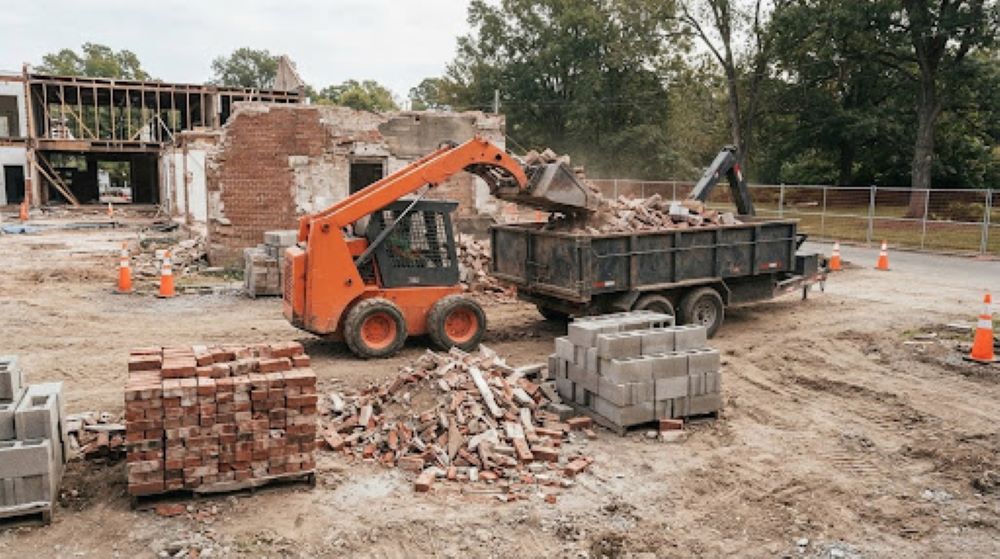
On any demolition site, piles of brick and block can build up fast. That’s especially true around older commercial or industrial buildings, where thick masonry walls were used to hold up serious weight. When those materials start coming down, they don’t just make a mess, they get in the way.
Leftover brick and block can slow progress if not handled the right way from the start. Too much sitting around the site leads to cluttered paths, wasted crew time, and even injuries if the pile shifts. There’s a smarter way to manage it. With the right plan, these materials can be moved out quickly and safely without holding up the next step of the project. Getting ahead of brick and block disposal helps keep the flow of tasks steady, especially during the busy summer construction months in Roseville, MI. When piles are handled promptly, crews can stay on task and avoid unnecessary slowdowns.
Sort Materials as You Go
During take-down work, it helps to stay organized. Sorting materials while they’re coming down keeps the site safer and speeds up what comes next.
- Brick, block, concrete, and other demolition debris each have their own best handling method, so we separate them early
- Mixing everything together means more double-handling later. Digging through piles to sort it again isn’t good for timing
- When haulers are on-site during teardown, we can load sorted material directly into trucks or dumpsters as we go
Staying ahead of the cleanup makes a big difference. Job sites stay clearer, and we avoid wasting hours on backtracking and resifting piles. Besides keeping work areas clean, sorting as you go makes it simple to match each material with the right recycling or disposal site later. Sorting on the fly minimizes mistakes and limits heavy lifting after demolition ends.
Safe Handling and Heavy Lifting
Anyone who’s ever tried moving a stack of old concrete block knows it’s heavier than it looks. A few chunks are fine. A whole wall’s worth? That takes equipment.
- Without proper machines or trained handlers, lifting heavy brick and block risks injury and damages
- Crews wear out faster dragging heavy debris by hand. That fatigue slows down the rest of the project
- Professional haulers use the right tools to lift and load safely, cutting down the chances of strain or accidents
These materials are dense, stubborn, and often broken into uneven shapes. Getting them off-site the right way starts with knowing how to move them without putting people or tools at risk. We pay close attention to safe lifting methods, secure stacking, and balanced loads, which help to prevent accidents and wasted effort. Heavy machines can take the strain, but crews must be careful about placement and keep walkways clear so everyone stays safe. Good communication and careful coordination mean each block ends up in the right spot without slowing down progress.
Know Where It All Goes
Just because something came from a building doesn’t mean it can go anywhere. That’s especially true in Southeastern Michigan, where rules around recycling and disposal depend on location and material type.
- Some brick and block can be crushed and reused as part of a clean aggregate mix
- Others may have too much paint, rebar contact, or other substances to go into recycling
- Not all drop-off sites accept all materials. Having a plan for what goes where avoids rejected loads, delays, or extra transport
Roseville Crushed accepts clean brick and block for recycling at our centrally located yard in Roseville, MI, and processes it into high-quality aggregate for reuse in construction and backfill. We help contractors with compliant sorting, drop-off, and local delivery or pick-up options.
We make sure each type of material ends up where it belongs. That often means multiple trips to different sites or working with pre-approved facilities ahead of time. When disposal gets done correctly, it keeps the whole process moving without added steps. That planning phase is a key, if often overlooked, part of demolition. By confirming disposal destinations before tearing down walls, we avoid last-minute scrambles and keep sites ready for every crew that comes onsite next.
Timing Your Cleanup Matters
One reason summer is a good season for this kind of work? Timing. Hauling out brick and block in July means faster movement and fewer weather delays.
- Dry conditions keep things more predictable. Less rain means fewer soft spots and no stuck trucks
- During summer months, job schedules are packed, but many sites are in high gear, so hauling windows are more open
- Getting rid of bulky waste now makes way for late-summer work like drainage, prep grading, or early foundation stages
When the site is clear, everyone can stay focused. Keeping the material moving off-site during dry and workable conditions helps cut stress later when fall deadlines start creeping in. Crews that remove heavy debris early in the summer make it easier to fit new phases of work before colder weather or wetter ground slows things down again. Having a timed plan in place means fewer surprises, less time spent shuffling debris, and more time focused on the build itself.
Smarter Starts After the Cleanout
Once the debris is off-site, projects flow better. Crews can move around more easily, deliveries have space to land, and staging areas stay open.
Handling heavy demolition materials early avoids setbacks later. If brick and block sit around too long, they block footpaths, slow down tools, and take up space that’s better used for active build zones.
Roseville Crushed offers quick turnaround on brick and block pickups and helps clients find the right disposal or recycling solutions for every job. Our same-day or scheduled services ensure material never sits longer than needed as the project moves forward.
We’ve seen what happens when cleanup waits too long. Crews scramble, costs go up, and timelines slip. But when the plan kicks in early and materials are managed with care, the whole job runs smoother from start to finish. Summer’s the time to keep things moving, especially when the next stage is just around the corner. Taking the extra step to clear away ruins and debris early pays off through easier access and safer pathways for everyone involved.
Frequently Asked Questions
When should brick and block be sorted during demolition?
The best time to sort brick and block is while materials are coming down. It keeps the site cleaner, reduces double-handling, and makes hauling more efficient.
What makes brick and block harder to remove than other debris?
Brick and block are dense, uneven, and heavier than they look once piles start building up. Without the right equipment, moving them safely can slow the job down and raise the risk of injury.
Can all brick and block be recycled?
Not every load can go straight into recycling. Clean materials are usually the best fit, while painted, contaminated, or mixed debris may need a different disposal plan.
How does early cleanup help the rest of the project?
Removing masonry debris early opens up space for crews, tools, and incoming materials. It also keeps walkways and staging areas from getting blocked during the next phase of work.
What should contractors look for in a brick and block disposal partner?
They should look for a team that can handle sorting, hauling, and proper recycling or disposal without creating extra delays. Fast turnaround and local experience make a big difference when schedules are tight.
Unlock the full potential of your demolition project by efficiently managing brick and block disposal. At Roseville Crushed, we specialize in transforming these materials into high-quality aggregate, ensuring smoother operations and keeping your job site productive. By planning your material handling with us, you can focus on what truly matters: moving your project forward without unnecessary delays. Contact us today to make your cleanup process seamless and sustainable.