Keep Fall Work Moving with Smarter Temporary Access
Temporary access can make or break the flow of fall work. In Southeastern Michigan, rain, wet leaves, softer ground, and early freezes can turn a simple site entrance into a muddy delay for crews, equipment, and deliveries.
At Roseville Crushed, we know that crushed asphalt is one material project teams may consider for temporary routes, staging areas, and worksite entrances. Whether it is worth using depends on the traffic using the route, the soil below it, drainage, how long the access area will be needed, and any project requirements that apply.
How Crushed Asphalt Supports Temporary Site Access
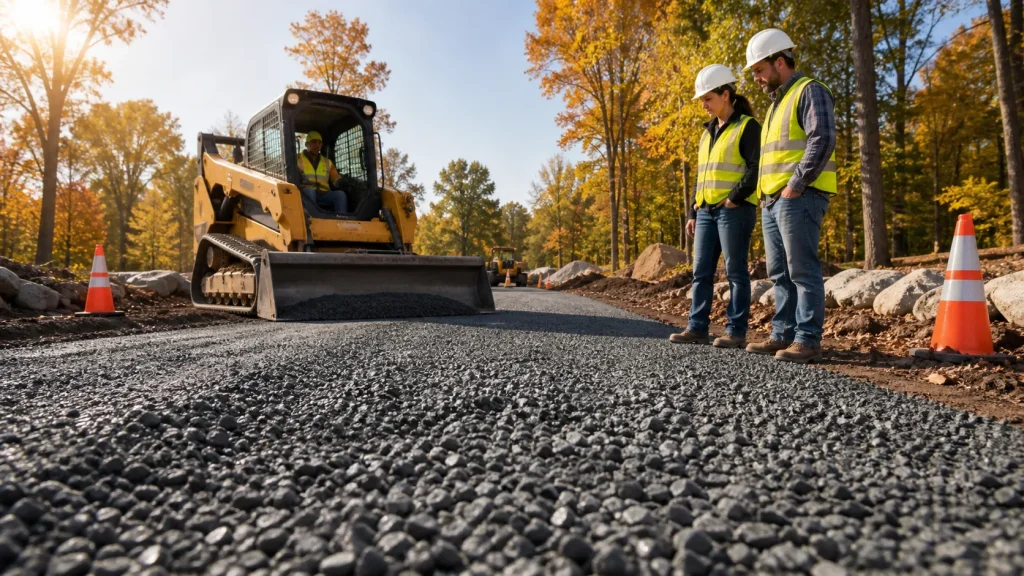
Crushed asphalt, often called reclaimed asphalt pavement or RAP, comes from asphalt removed during roadway and paving work and then processed for reuse. Its dark, granular look comes from a mix of aggregate and aged asphalt binder.
When an access area is properly prepared by the project team, crushed asphalt may create a firmer travel surface than exposed soil. That can help reduce ruts, mud tracking, and vehicle delays in suitable conditions. It can be a practical material to consider when a site needs a temporary surface without placing new asphalt pavement.
Still, no aggregate material performs the same way on every property. Results can change based on particle size, material gradation, moisture, drainage, and the weight and frequency of traffic. Soft soil, standing water, steep grades, and repeated heavy truck loads can all affect how well a temporary route holds up.
Before choosing a material, we recommend that you consider:
- The condition of the existing soil
- Whether water drains away from the route
- The vehicles and equipment that will use the surface
- How long the access route will remain in place
Compare Convenience and Project Needs
For a short-term route, crushed asphalt can be appealing because it may be easier to remove or repurpose after the work is complete than a permanent paved surface. The real decision should account for the full material plan, including hauling, placement, future removal, and what happens to the material when the project ends.
Traffic makes a big difference. A route used mainly by pickups and small equipment has very different demands than an entrance receiving loaded dump trucks, concrete trucks, or frequent deliveries. A material that works well for light traffic may not be the right choice for heavier, repeated use.
Project duration matters, too. Crushed asphalt may be worth evaluating for seasonal access, especially when the route is temporary and site conditions are favorable. Longer-term access may call for a different recycled aggregate, more material depth, or additional site planning based on soil and traffic conditions.
Plan for Michigan’s Wet and Freezing Fall Weather
By late September, Southeastern Michigan sites can begin seeing regular rain, colder nights, and changing ground conditions. Unprotected soil can become muddy quickly, especially in low areas or along heavily traveled entrances.
Drainage is one of the largest factors in temporary access performance. Water that collects on top of a route, or beneath it, can weaken the soil below and limit the benefit of any surface material. Before material arrives, project teams should look closely at low spots, runoff paths, and places where water tends to collect.
Cold weather adds another concern. Moisture beneath a temporary access surface can freeze and thaw as temperatures change, which may create uneven or unstable areas. We recommend monitoring temporary routes throughout the season, particularly before larger deliveries or periods of heavier traffic.
A sound fall access plan should account for:
- Rainwater moving across the property
- Existing soft or low areas
- Changing temperatures overnight
- Expected delivery schedules and traffic patterns
Choose Materials Based on Traffic and Site Conditions
Crushed asphalt is only one option among recycled aggregates and other construction materials. Depending on the job, another crushed aggregate product may better match drainage needs, traffic demands, or project specifications.
The best starting point is a clear look at the route itself. Consider what vehicles will travel it, how often they will pass through, whether the site is level or sloped, and how stable the soil is before material is placed. Those answers help project teams choose a material plan that fits the work instead of relying on a one-size-fits-all approach.
Material planning also includes availability and logistics. At Roseville Crushed, we supply recycled aggregates and other construction materials for pickup or delivery. We also accept eligible concrete and block materials for recycling. Confirming material specifications, pickup needs, and delivery timing before work begins can help prevent avoidable interruptions once wet weather arrives.
Get Reliable Materials for Your Next Project
Roseville Crushed can help you source quality materials for driveways, base layers, and other construction needs. Explore our crushed asphalt options to find a practical, recycled material for your project. Contact us to discuss availability, pickup, or delivery.
Frequently Asked Questions About Crushed Asphalt
Is crushed asphalt good for temporary construction access?
Crushed asphalt can be a practical option for temporary access when the site has suitable drainage, stable underlying soil, and traffic demands that match the material’s capabilities.
Can crushed asphalt help reduce mud on a jobsite?
It may help create a firmer surface than exposed soil and can reduce mud tracking in appropriate conditions. Results depend on drainage, weather, traffic, and the condition of the site beneath the material.
Does crushed asphalt work in Michigan fall weather?
It can be considered for fall projects, but rain, cold temperatures, and freeze-thaw cycles should be part of the planning process. Drainage and site conditions are especially important during Southeastern Michigan’s wet fall season.
What types of traffic should be considered before using crushed asphalt?
Consider the weight, frequency, and type of vehicles using the route, including pickups, equipment, delivery trucks, dump trucks, and concrete trucks. Heavier or more frequent traffic may require a different material plan.
Does Roseville Crushed provide crushed asphalt installation?
No. We supply recycled aggregates and other construction materials for pickup or delivery, and we accept eligible concrete and block materials for recycling.