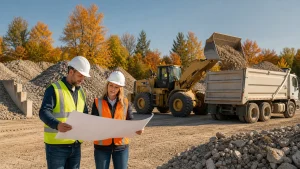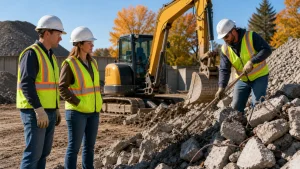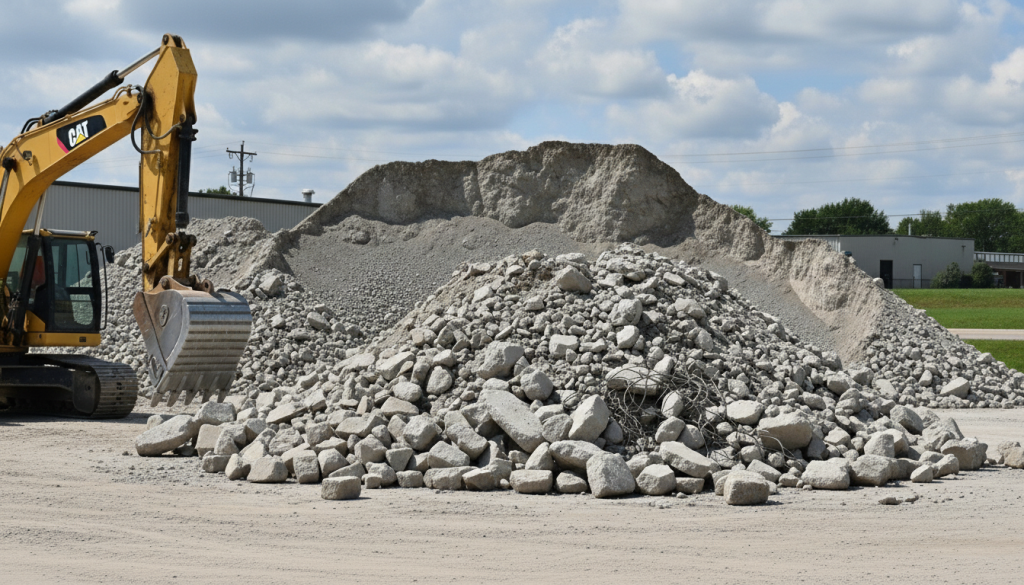
When the weather doesn’t stay still for long, the ground beneath a job site needs to keep its hold. That’s why we like working with crushed concrete in Roseville, MI. It gives us a base that holds steady through snow, rain, and sunshine, all without a lot of fuss. Layers built with care and the right material can save time later, especially when the seasons don’t give much room for error.
We’ve seen how crushed concrete handles job sites that stretch across late winter into spring, or heat that hits hard in July. It’s dependable, and when paired with smart prep, it supports smoother work from start to finish. Let’s talk about how it holds up over the year, where it performs best, and how to use it well in changing conditions.
How Crushed Concrete Holds Up in Every Season
Michigan weather isn’t shy. One week it’s freezing, the next it’s melting, and summer tends to bring its own headaches. Crushed concrete helps level that out.
- In cold months, it stays solid through freeze-thaw cycles without falling apart or shifting. The way it compacts keeps moisture moving without opening up potholes or ruts.
- Once spring thaws arrive, ground surfaces can turn soft fast. Crushed concrete drains better than some natural materials, which helps reduce pooling or sags as the soil warms and refreezes.
- And by the time summer dries everything out, this material doesn’t crumble under pressure. Haul trucks, site traffic, and heavy gear won’t cause it to move or rut easily when compacted right.
At Roseville Crushed, we produce MDOT-spec 21AA crushed concrete, which is engineered for maximum stability and drainage. This helps our customers keep projects moving no matter the season.
Season after season, staying level matters. We count on crushed concrete to help prevent delays from soft spots, standing water, or shifting ground.
Best Uses for Crushed Concrete on Active Job Sites
Most job sites in our area need stable layers to keep things moving. Crushed concrete fills that role in more ways than one.
- It’s tough under roads or slabs, giving us a dependable base for temporary drive lanes or equipment pads.
- On large jobs, it works well as backfill around trenches or utility lines when we’re filling wide areas that need to stay put over time.
- For permanent or semi-permanent haul roads, we build up layers to make a tight surface that stands up to bumps and mud both.
Our recycled crushed concrete is available for pickup or can be delivered throughout Southeastern Michigan, making access easy for local contractors and job site needs.
We notice fewer slowdowns when we start with solid footing. Less shifting means less rework, and fewer surface problems later.
Site Prep Tips When Using Crushed Concrete
A steady base starts with what’s underneath. Even the best material won’t hold right if the surface below it isn’t ready.
- We check and prep the subgrade to make sure it’s firm and shaped correctly. If there are any soft spots, they get fixed before the first load arrives.
- Sometimes we combine crushed concrete with another layer, gravel or sand, to help improve drainage or get the compaction just right. Layering at the right depth matters more than people realize.
- Timing matters too. Laying material too soon after snowmelt or in the middle of heavy rain can slow drainage and cause uneven settling.
We keep a close eye on weather forecasts before we compact anything that needs to carry real weight.
Seasonal Planning: When to Lay, Layer, or Hold Off
Late winter and early spring build schedules need a little more strategy. We don’t just drop material and hope for the best.
- The best time to lay and compact crushed concrete is during windows of steady weather, often early fall or late spring, when the ground isn’t soaked or frozen.
- In February and March, we might blend materials to help it stay tight until the full thaw’s done. That might include adding top cover or filter fabric, depending on what the soil’s doing that week.
- If we’re noticing patches that aren’t draining or show signs of water pushing up, we wait. Rushing crushed fill into bad conditions almost always means coming back to fix it later.
Each job is different, but good instincts and planning keep most surprises from turning into rework.
Why Local Sourcing Matters for Crushed Concrete
Getting material from nearby makes more sense than some people think. It’s not just about mileage.
- Local material tends to match the way the ground moves and drains in Roseville, MI better than options hauled in from farther off.
- Even small delays in delivery can throw off timing during short weather windows. Sourcing nearby helps us keep to schedule.
- It also makes it easier to adjust. If we need more, different grading, or a faster turnaround, the closer the source, the smoother the fix.
Because we recycle local concrete debris at our Roseville yard, we provide a consistent supply and help cut down on unnecessary transport, keeping costs down and projects greener.
Keeping things local helps keep jobs aligned with Michigan’s natural soil shifts and weather routines.
Building Strong All Year Long
Whatever the season, using the right material brings fewer surprises. Crushed concrete gives us something stable to build from. It handles water the smart way, stays put through all kinds of weight, and works well as part of a full layer system under busy job sites.
In places like Roseville, MI where winter doesn’t stay mild and spring doesn’t wait its turn, crushed concrete helps hold the line. Layered right, placed with care, and timed around what the ground’s already doing, it keeps everything moving like it should, from the bottom up.
At Roseville Crushed, we’re committed to providing reliable solutions to keep your projects on track, no matter the season. Our crushed concrete in Roseville, MI is specially processed to deliver optimal compaction and drainage, weathering Michigan’s climate effectively. By choosing our locally sourced material, you reduce transportation delays and ensure a steady supply for all your project needs. Contact us today and see how our products can support your next build with resilience and efficiency.