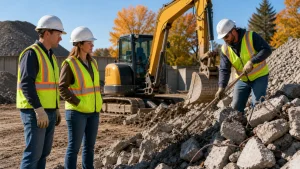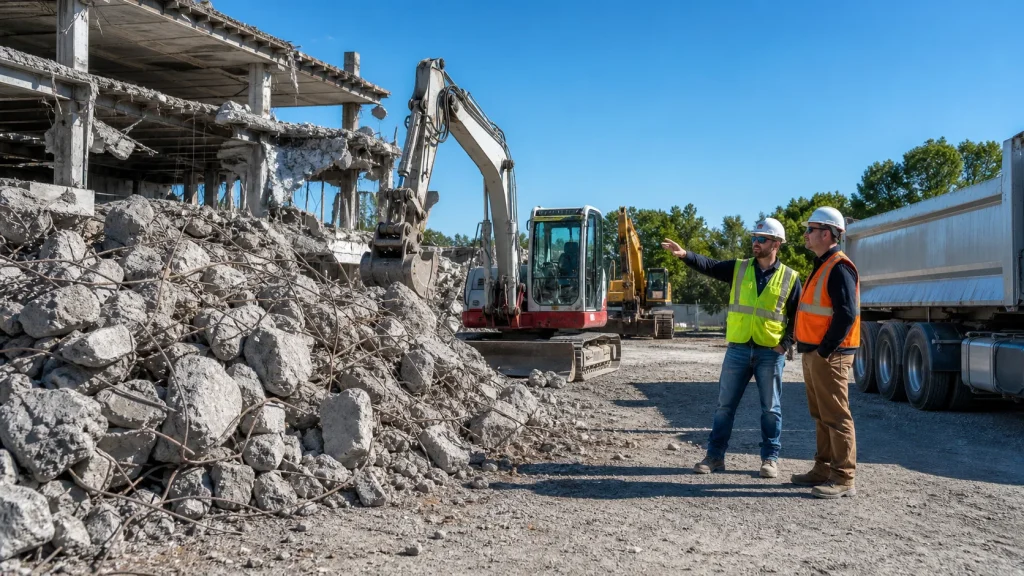
Broken concrete and block piles can become a work-site problem long before they become a cleanup problem. When debris takes up room, it can limit access, crowd material staging areas, and leave follow-on crews waiting for space to open up.
We often see this become more pressing as Southeastern Michigan projects head into fall. Shorter weather windows can make it harder to absorb delays, so a clear plan for concrete and block removal helps keep the next phase from getting stuck behind a pile.
Stockpiles Restrict Access and Slow Daily Operations
A debris pile changes how a site functions. Equipment may need to take longer routes, trucks may have fewer places to turn around, and crews may lose usable work space. Even when the pile is out of the main work area, it can still interfere with where materials need to be staged next.
Unprocessed concrete and blocks can create daily slowdowns such as:
- Reduced paths for loaders, trucks, and other equipment
- Less room for incoming materials and temporary storage
- Blocked access to excavation, grading, or utility areas
- Added time spent working around debris instead of moving forward
Once the next trade is scheduled, limited access can create a chain reaction. Excavation may wait for room, grading work may have to be shifted, and utility crews may need a different route into the site. That means more coordination for project managers and more chances for a schedule to slip.
Planning debris removal early helps protect active work zones. Clearer traffic patterns and open staging areas make it easier for crews to stay productive, especially when September weather starts making every workable day count.
Delayed Removal Creates Cost and Scheduling Pressure
A temporary debris pile rarely stays simple. If crews need to move broken concrete from one corner of the site to another, then move it again later, the pile creates repeated handling work. Space that could support active construction becomes a holding area instead.
Delays can also affect scheduling. Equipment may need to wait until access improves, while subcontractors may have to adjust their planned work sequence. When several activities depend on the same open area, a pile of concrete or blocks can create uncertainty that reaches beyond demolition.
For projects with a substantial amount of material, some contractors may evaluate a mobile concrete crushing service for on-site processing. That option may make sense when the site has enough material volume, adequate processing space, and a schedule that supports handling material on location. We do not provide mobile crushing, so it is important to review the project conditions carefully before choosing that route.
In other cases, hauling broken concrete and blocks to a recycling facility may be the better fit. The choice depends on available space, site layout, debris volume, hauling logistics, and how quickly the next phase needs the area.
Recycling Concrete Restores Usable Site Space
Removing demolition debris gives the site room to work again. Open space can be used for equipment movement, material staging, active construction tasks, and safer traffic flow. Recycling is a practical next step once broken concrete and blocks are ready to leave the job site.
At Roseville Crushed, we are a concrete crushing and recycling facility that accepts broken concrete and blocks. Bringing recyclable material to our facility can help you clear the way for the work that follows demolition without allowing debris to sit in the middle of the project.
Recycled aggregate materials can also support future material needs. When removal and material supply are considered together, project teams may be able to reduce interruptions between phases. We provide recycled aggregate materials, with delivery available to job sites when needed.
The goal is not simply to make a pile disappear. It is to restore workable space and keep materials moving in a way that supports the construction schedule.
Plan Removal Before Debris Becomes a Bottleneck
The best time to make a removal plan is before the pile limits access. A quick review of the site can help you decide whether hauling to a recycling facility or researching a mobile concrete crushing service better fits the project.
Before demolition debris begins to interfere with other work, we recommend confirming:
- The estimated volume of concrete and block
- Which materials are accepted for recycling
- Hauling needs and truck access points
- Available room for loading and traffic flow
- A removal timeline tied to upcoming work phases
A mobile concrete crushing service search may be relevant when you are evaluating on-site processing for a larger concrete volume. Before making a decision, confirm material acceptance requirements, usable processing space, equipment access, and the project schedule. Not every site is set up for on-site processing, and a recycling facility may be the more practical option.
The main takeaway is simple: do not let demolition debris become an unplanned part of the next construction phase. Clearing it early helps preserve access, avoid repeated handling, and protect the schedule as fall work moves forward.
Keep Your Site Moving Forward
When debris begins to hold up the next phase of work, our mobile concrete crushing service can help turn concrete, brick, and block into usable material on site. We help reduce stockpile volume and support a more efficient workflow. Roseville Crushed is ready to help you clear space and keep your project progressing.
Frequently Asked Questions About Stockpiled Debris
How Can Stockpiled Concrete Delay Site Work?
Stockpiled concrete can limit equipment access, consume staging space, obstruct work areas, and force crews to move material multiple times before the next construction phase can begin.
What Materials Can Roseville Crushed Accept For Recycling?
We accept broken concrete and blocks for recycling. You should confirm material details with us before scheduling delivery.
When Should A Contractor Consider A Mobile Concrete Crushing Service?
A mobile concrete crushing service may be worth evaluating when a project has a large volume of concrete, adequate processing space, and a schedule that supports on-site material handling.
Why Is It Important To Plan Debris Removal Before Fall?
Fall weather can create tighter construction windows in Southeastern Michigan. Removing demolition debris early can help preserve access and keep follow-on work on schedule.
Can Roseville Crushed Deliver Recycled Aggregate To Job Sites?
Yes. We provide recycled aggregate materials and offer delivery to job sites.